
How Startups in Pakistan Can Survive an Economic Crisis without Stalling Growth
Building a startup is never easy. Building one during an economic crisis is an entirely different challenge.
For founders in Pakistan, the current environment demands more discipline, sharper decision making, and a stronger focus on sustainability. While the broader economy has shown some signs of stabilization, uncertainty still shapes the business environment. The IMF’s January 2026 outlook projects Pakistan’s real GDP growth at 3.2 percent for 2026, while the State Bank of Pakistan has kept the policy rate at 10.5 percent and continues to point to a cautious macroeconomic outlook. At the same time, official inflation reporting for February 2026 shows that price pressures remain a live concern for households and businesses alike.
For startups, this means one thing: survival and growth can no longer depend on optimism alone. Founders must build smarter, leaner, and with far more clarity than before.
The good news is that difficult economic periods do not only eliminate businesses. They also create stronger ones. In moments like these, startups that solve real problems, manage cash carefully, stay close to customers, and adapt quickly often emerge stronger than those built in easier times.
Put cash flow ahead of vanity growth
In a difficult economy, revenue matters more than appearances.
Many early stage startups make the mistake of chasing scale too early. They focus on follower counts, downloads, reach, or expansion without building a reliable path to income. But when capital is tight and customers are more price sensitive, cash flow becomes your real growth engine.
This does not mean founders should stop thinking big. It means they should understand the difference between growth that looks good and growth that keeps the business alive. A startup that brings in recurring revenue from a smaller but loyal customer base is in a far stronger position than one that grows fast without knowing how it will sustain itself.
Founders should regularly ask:
- What is our most reliable revenue stream?
- Which product or service brings the healthiest margins?
- What costs can we reduce without damaging the customer experience?
- How many months of runway do we actually have?
The startups that survive economic pressure are often the ones that know their numbers deeply and review them often.
Solve urgent problems, not optional ones
Economic downturns change customer behavior.
People and businesses become more careful about where they spend. This means startups offering nice to have solutions may struggle, while those solving urgent and recurring problems often remain relevant. In Pakistan, that could mean building around cost savings, efficiency, accessibility, logistics, healthcare, agri productivity, digital payments, education access, or business automation.
The sharper your problem statement, the stronger your position.
This is especially important for early stage founders. Instead of asking, “Is this idea exciting?” the better question is, “Will someone still pay for this when budgets are tight?”
If the answer is yes, you are building something resilient.
Build lean, but do not stop moving
When the economy tightens, many startups respond by freezing.
They delay decisions, postpone launches, cut all experimentation, and become overly defensive. While caution is necessary, total hesitation can be just as risky as reckless spending. The goal is not to stop. The goal is to move with discipline.
Lean growth means:
- testing before fully building
- hiring only when clearly necessary
- focusing on one or two core offerings
- using partnerships instead of expensive expansion
- choosing measurable growth over scattered activity
This is where startup ecosystems and incubation support become especially valuable. Access to mentors, networks, workspaces, strategic guidance, and market exposure can reduce the burden on founders and help them make smarter decisions with fewer resources.
Keep customers close and feedback closer
During an economic crisis, assumptions become expensive.
Startups cannot afford to build in isolation. Customer needs shift quickly in uncertain environments. A user who wanted convenience six months ago may now want affordability. A business client that wanted premium features may now prefer simple tools that save time and money.
Founders should stay in regular contact with users, buyers, and partners. Feedback should not be treated as a formality. It should guide product decisions, pricing, positioning, and communication.
The more clearly you understand your customer’s pressure points, the better your startup can respond with relevance.
Use AI where it improves efficiency
For startups in Pakistan, AI is no longer just a trend. It is becoming a practical tool for doing more with less.
This matters even more in a difficult economy. Startups with small teams can use AI to speed up research, improve marketing workflows, automate customer support, draft content, organize internal knowledge, summarize meetings, and streamline repetitive operational tasks. Used properly, AI can reduce wasted time and improve output without requiring a major budget.
This opportunity is becoming more important as Pakistan’s digital economy continues to show momentum. State Bank data reported by multiple outlets shows that Pakistan’s IT and ICT exports have continued to grow strongly, with exports crossing $2.2 billion in the first half of FY2025–26 after record performance in FY2024–25. That signals continued room for digital and tech enabled businesses to compete and expand, even in a constrained economy.
But founders should be careful not to use AI just because it is popular. The real question is simple: where can AI save time, reduce cost, improve quality, or help us serve customers better?
That is where adoption becomes strategic.
Strengthen trust, not just traction
In uncertain times, trust becomes a growth asset.
Customers want reliability. Partners want seriousness. Investors want evidence of discipline. Teams want confidence in leadership.
That means founders must communicate clearly, deliver consistently, and avoid making promises they cannot support. Sometimes the strongest signal a startup can send is not rapid expansion. It is operational maturity.
Trust is built through:
- clear value propositions
- consistent communication
- dependable delivery
- transparent pricing
- realistic planning
- strong founder credibility
When external conditions are shaky, trust can become the reason people still choose you.
Think long term, act short term
One of the hardest parts of building in a crisis is balancing immediate survival with long term ambition.
Founders still need a larger vision. But execution must happen in shorter cycles. Monthly targets, tighter budgets, quicker feedback loops, and focused priorities matter more than rigid long term assumptions. Conditions can change quickly, and startups must remain flexible enough to respond.
This is not a time for panic. It is a time for precision.
The startups that endure will be the ones that adapt
Economic crises test every business, but startups feel that pressure more intensely. Yet they also have one major advantage: they can move faster, learn faster, and adapt faster than large organizations.
For Pakistani founders, this is the moment to build with clarity. Stay close to the market. Protect your cash. Focus on real value. Use technology wisely. Grow sustainably.
The economy may be uncertain, but opportunity still exists for startups that are disciplined, relevant, and resilient.
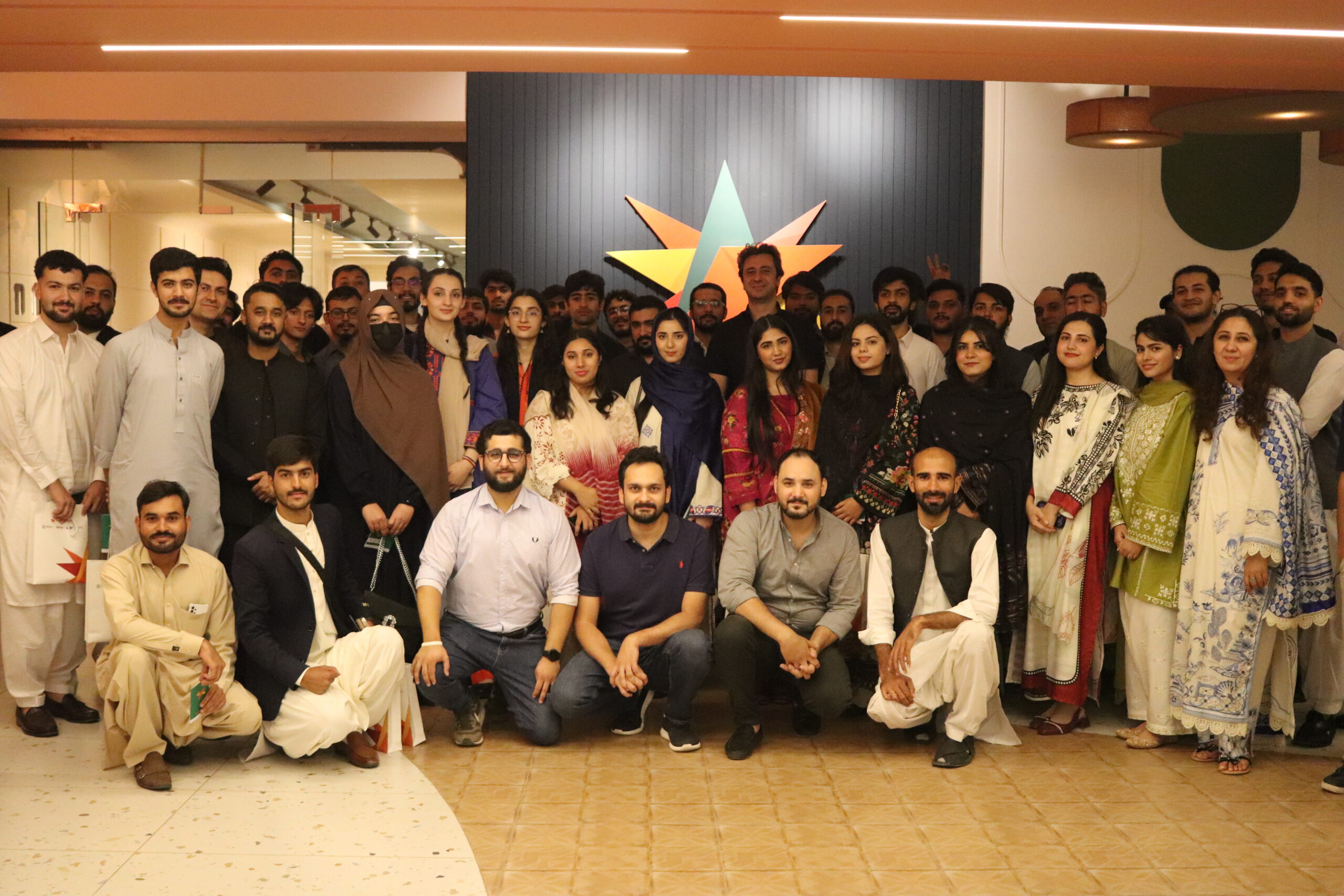
At NIC Peshawar, this is exactly why startup support matters. In difficult times, founders do not just need motivation. They need the right ecosystem, strategic direction, and practical support to turn pressure into progress.